The Complete Checklist for Relocating to Ann Arbor
Moving to Ann Arbor? A week-by-week relocation checklist: neighborhoods, rent ranges, utilities, DMV, schools, and what you'll need on arrival.
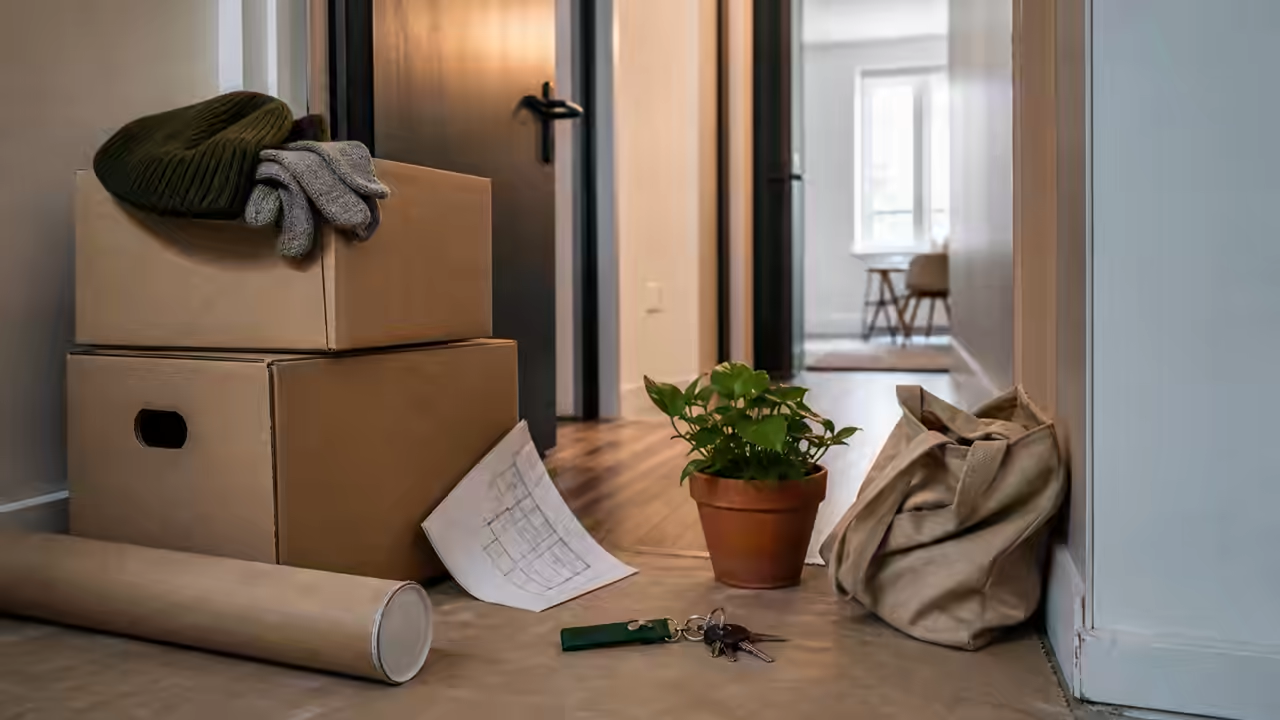
You got the job. Or the grad school acceptance. Or you decided it was time for a city with good coffee, better bookstores, and a football stadium that seats more people than most small towns. Whatever pulled you here, you're moving. That means phone calls, paperwork, and decisions you'd rather not think about at 11 p.m. on a Tuesday.
This is the whole thing, eight weeks out to your first Saturday in town. No filler. No "start of your new chapter" pep talk.
Is Ann Arbor right for you?
It depends on what you're after. The city has about 123,000 people and roughly doubles in population on football Saturdays. The University of Michigan employs about 33,000 people and enrolls more than 53,000 students. That's the engine. If you're moving for U-M as faculty, staff, or a grad student, the university runs the show. If you aren't, the university still runs the show. Your commute gets shaped by game-day road closures. Your rent gets set by the academic calendar. You'll learn to live with it.
The job market extends well past campus. Google has an office here. So do Thomson Reuters, ProQuest, Toyota's autonomous vehicle research group, and a cluster of biotech and healthcare startups orbiting the U-M Health System, one of the largest hospital networks in the Midwest. If you work in tech, medicine, higher ed, or research, you'll find your people. Our guide on moving to Ann Arbor for a job at Google, U-M Hospital, or Thomson Reuters breaks down which neighborhoods land closest to each.
If you want big-city energy, Ann Arbor isn't that. Detroit is 45 minutes east. Chicago is about four hours. What you get here is a walkable mid-sized city with a downtown you can cross in 20 minutes on foot, a river running through it, and more trees than you'd expect from a place that also has a Trader Joe's.
How much does it cost to live in Ann Arbor?
Housing is the line item that surprises people. Rents run well above the Michigan average. You're paying for location, the university anchor, and a greenbelt policy that limits sprawl and keeps supply tight.
A new-construction one-bedroom with in-unit laundry, controlled access, and modern finishes goes for about $2,250 a month. That's roughly the going rate for the 608-square-foot Walnut plan at Packard Row. A two-bedroom in a similar building runs $2,500 to $3,015 depending on square footage and layout (Packard Row's two-beds range from 838 to 1,022 square feet). For a fuller breakdown by unit type and neighborhood, see our 2026 guide to Ann Arbor apartment rent. Older buildings and units further from downtown can drop below $2,000, but they go fast in July and August when the lease cycle peaks.
Utilities vary. DTE Energy handles electric and gas for most of the city. In a 900-square-foot apartment, expect $80 to $130 a month combined in summer, and $120 to $180 in winter when the heat runs. Internet runs $50 to $80 a month through Xfinity or AT&T Fiber. Check your specific address; fiber coverage is spotty. Water and trash are often bundled into rent in a managed building. At Packard Row, trash, recycling, sewer, and snow removal are all included, which is typical for newer Class A buildings on this side of town. Otherwise, the city of Ann Arbor bills water separately and runs curbside trash, recycling, and compost pickup.
Groceries track a little above the national average. You'll find Trader Joe's on Stadium Boulevard, a Whole Foods on Washtenaw, Kroger on South Maple, and the Saturday Kerrytown farmers' market for the good tomatoes. Gas tracks the Michigan average within a few cents. Car insurance in Michigan is famously expensive. Budget $100 to $200 a month per vehicle depending on coverage and driving record, and get quotes before you move. Michigan is a no-fault state, which is what drives premiums up.
Which Ann Arbor neighborhood should you pick?
The city breaks into about a dozen distinct neighborhoods. Here's the short version.
Bryant Pattengill East sits southeast of downtown along Packard Street. Quiet, mostly residential, good access to I-94. Newer apartment construction is concentrated here. Packard Row at 2111 Packard Street is the bellwether for what new Class A buildings in this pocket look like: rooftop solar, EV charging, 24-hour fitness, in-unit washer/dryer, controlled access. You'll drive or bus to most things, but you get more square footage for your money, and you're a few minutes from Briarwood, the U-M Golf Course, and County Farm Park. Our Bryant-Pattengill East neighborhood guide goes deeper on what daily life there actually looks like, and the Packard corridor deep dive breaks down the food, transit, and rhythm of the street itself.
Kerrytown is the charming one. Brick streets, Zingerman's Deli, the farmers' market, the Ann Arbor Distilling Company. You walk everywhere. Apartments skew older, mostly converted houses and small buildings from the 1920s through 1960s. Hard to find parking. Hard to find availability. Worth it if you can swing it.
Burns Park is the tree-lined, family-heavy neighborhood just east of central campus. Bigger houses, some subdivided into rentals. Quiet. Close to U-M's medical campus.
Old West Side sits west of Main Street down toward Washtenaw Dairy. Historic houses, sidewalks, big porches. A mix of owner-occupied homes and rentals popular with grad students and young families.
Water Hill is north of downtown along North Main. A little grittier, a little cheaper, a little further out. More house rentals, fewer apartment buildings.
Downtown itself (Main Street, State Street, South University) is the most walkable and the most expensive. Rent a studio or one-bedroom in a mid-rise and you can skip the car entirely. Students dominate South U. Main Street skews more toward professionals and restaurant-goers.
Briarwood and South Ann Arbor is the retail corridor. The mall is here. Chain restaurants. More parking lots. Rents drop a bit. You'll need a car, but you're near I-94 and US-23.
Working at U-M's central campus or the medical center? Live north or east of campus and you'll skip most of the game-day gridlock. Working at the south campus research facilities or anywhere near Briarwood? The southeast neighborhoods make your commute easy.
Rental market timeline
Ann Arbor runs on an academic calendar. Most leases turn over in late July or early August, aligned to U-M's fall semester. Looking in May or June, inventory is thin. Looking in late July, competition is fierce and landlords move fast.
Start your search 90 days before you need to move. Buildings with professional management lease year-round; Packard Row, run by Cabrio Properties, is one example, and you can usually lock something down 60 days out. Private landlords with a duplex or converted house often don't know what they'll have available until 30 days before the current tenant leaves.
Tour in person if you can. Photos lie. The place with great natural light online might face a parking lot and a dumpster enclosure. If you can't visit, ask for a video tour that walks from the front door to every window.
8 weeks before the move
Renting? Start your search now. Buying? Get pre-approved and get a local agent. The market is competitive. Median home prices sit north of $500,000 and desirable neighborhoods move fast. An agent who knows Washtenaw County matters. A friend's cousin in Birmingham doesn't.
Sketch out a utilities budget at the same time. Write down DTE Energy (electric and gas), internet (Xfinity or AT&T Fiber), renter's or homeowner's insurance, and water and trash (through the city if not bundled into rent). Total it. Add $100 for the things you forgot.
Check your employer's relocation policy. U-M offers relocation packages for faculty and some staff positions. Private employers vary. Some cover moving costs, some don't. Ask directly: what's reimbursed, what's a lump sum, what receipts you need to save.
Then make the moving company vs. DIY call. For a one-bedroom moving within Michigan, a moving company runs $800 to $2,000 depending on distance and how much stuff you have. A cross-country move for a three-bedroom house can hit $6,000 to $12,000. U-Haul is cheaper but you're driving. PODS and similar container services split the difference: they drop a container, you load it, they move it. Book movers or reserve a truck now. Summer is peak season. If you're moving in August, book in June.
While you're waiting, start sorting your stuff. The move is a forced declutter. Take it seriously. Sell the furniture that won't fit. Donate the clothes you haven't worn in 18 months. Ann Arbor has a Habitat for Humanity ReStore and multiple Goodwill locations for drop-offs.
Notify your current landlord if you're renting. Check your lease for notice requirements. 30 days is standard, 60 isn't uncommon.
4 weeks before the move
Sign your lease or close on your house. Get this done. Everything else depends on an address.
Then set up utility transfers. Call DTE Energy and schedule service to start the day you move in. Do not wait until moving day and hope the power is on. For internet, schedule installation a day or two after you arrive. The technician needs access, and you'll want to be there.
Change your address with USPS. Go to usps.com, pay the $1.10 identity verification fee, and set a mail-forwarding date. This catches the random stuff: bank statements, magazine subscriptions, the holiday card from your dentist. You'll forget to update those individually.
Then go down the list of everything that mails you anything: employer's HR department, banks and credit cards, health and dental and vision insurers, car insurer, renter's or homeowner's insurer, investment accounts, student loan servicers, and any subscription boxes. Take an hour. Knock it out.
If you're coming from out of state, call Michigan car insurance about your move date. Michigan requires a Michigan no-fault auto policy before you can register your vehicle. Get quotes from at least three companies. Progressive, State Farm, and Auto-Owners all have a presence in Michigan. Bundling with renter's or homeowner's insurance sometimes saves 10 to 15%.
If you have kids, register them for school. Ann Arbor Public Schools is the main district, covering most of the city. Registration requires proof of residency (lease or mortgage statement), birth certificate, immunization records, and a photo ID. Start online at a2schools.org.
Find a doctor, dentist, and vet if you're new to the area. U-M Health System (Michigan Medicine) is the dominant provider. IHA and Trinity Health also have offices throughout Washtenaw County. Good primary care doctors in Ann Arbor book 4 to 8 weeks out for new patients. Make appointments now for anything routine.
2 weeks before the move
Pack in earnest. Label boxes by room. Use a Sharpie, not a system. The "blue sticker for kitchen, red for bedroom" color-coding is a lie people tell themselves. The Sharpie works. Write the room and a short list of what's in there. "BEDROOM: sheets, lamp, nightstand books."
You'll need supplies. Ann Arbor has multiple U-Haul locations for boxes, tape, and padding. Home Depot on Carpenter Road and Lowe's on Jackson Road also stock moving supplies. Or ask on Freecycle and Nextdoor. People who just moved want their boxes gone.
Take photos of every electronics connection before you unplug it. The HDMI tangle behind your TV will make no sense when you're setting it up again at 10 p.m. after driving all day.
Decide what you're eating on moving day before moving day. You won't want to cook. You won't want to grocery shop. Frita Batidos for Cuban-inspired burgers, Slurping Turtle for ramen, a Zingerman's sandwich. All deliver.
Finally, confirm with your movers or truck rental. Call them. Ask: "We're still on for [date] at [time]?" Write down the name of the person who says yes.
Moving week
Pack a first-night box and put it in your car, not the moving truck. Contents: toilet paper, paper towels, trash bags, a shower curtain, soap, a towel, phone charger, a change of clothes, sheets and a pillow, a box cutter, basic cleaning supplies, snacks, and your coffee setup. Beans, grinder, french press. Whatever you need to function the next morning. Label this box with tape on all six sides.
If you're bringing your fridge, unplug it 24 hours before the move and put towels down. Drain the gas from the lawnmower; movers won't transport fuel. Do a final walkthrough of the old place and photograph every empty room. You want proof if a landlord comes back about "damage" later. Charge everything: phone, laptop, portable battery, Bluetooth speaker for the unpacking playlist.
The week you arrive
Walk a half-mile radius around your new place on foot. Find the closest coffee shop. Find the closest grocery store. Find the closest park bench where you'd actually sit and read. You'll feel less lost once you know what's within walking distance.
Unpack the kitchen, bathroom, and bedroom first. The living room can wait.
Set up your city services account. Ann Arbor runs an online portal for water billing and trash services. Go to a2gov.org and create an account. While you're there, download the A2 Fix It app. You'll use it to report potholes, broken streetlights, missed trash pickup, and anything else the city handles.
Get a library card. The Ann Arbor District Library is one of the best-funded systems in the country. Library Journal named it National Library of the Year back in 1997 and it's pulled five-star ratings for 15 years running. Five branches. Free books, tools, musical instruments, museum passes, 3D printers, and meeting rooms you can reserve. Five minutes with proof of address.
Your car and driver's license
Michigan law gives new residents 30 days to transfer their driver's license and vehicle registration. The Secretary of State office in Ann Arbor is at 353 North Maple Road. Make an appointment online. Walk-ins are possible but you'll wait.
For a Michigan driver's license, bring: your out-of-state license (current or expired less than four years), proof of Social Security number, proof of Michigan residency (lease, utility bill, or mortgage statement), and proof of legal presence (birth certificate, passport, or permanent resident card). The fee runs around $25 to $45 depending on license type and endorsement. No written test if your out-of-state license is valid.
For vehicle registration, bring the vehicle title (or current registration if there's a lien), proof of Michigan no-fault insurance, and a Michigan driver's license or state ID. The registration fee depends on the vehicle's age and value. Expect $100 to $250 for a typical car newer than five years old. You'll pay a 6% use tax on the purchase price if you bought the car within the last 90 days in another state. The plate transfer fee is about $10.
Public transit and getting around
TheRide (Ann Arbor Area Transportation Authority) runs buses across the city and into Ypsilanti. Fares are $1.50 per ride, or free if you're a U-M student, faculty, or staff member with an MCard. Routes 4 and 6 run along Washtenaw Avenue every 15 to 20 minutes during peak hours. The system is decent for a city this size, but it's still a bus system. You'll want a car unless you live and work downtown or on central campus.
Biking is popular. The Border-to-Border Trail runs along the Huron River. Protected bike lanes exist on a few major streets including William, First, and Division. Winter biking is possible but wet and salty. Fenders aren't optional.
Rideshare (Uber, Lyft) is available, though thin outside downtown and campus. A ride from Bryant Pattengill East to downtown runs about $12 to $18. At 1 a.m. on a Saturday in January, it might be $30, and you'll wait 15 minutes.
How to meet people in Ann Arbor
If you're not arriving with a built-in social network like a grad cohort or workplace team, Ann Arbor is friendly but you have to show up.
Join something. The Ann Arbor Observer City Guide lists every club, group, and league in the area: book clubs, running groups, soccer leagues, board game nights, volunteer orgs. Pick one. Go. Keep going.
Rec sports leagues are thick on the ground. MI Life Sports and Ann Arbor Rec & Ed run year-round leagues for soccer, volleyball, basketball, softball, kickball, and dodgeball. You can sign up as an individual and get placed on a team.
Planet Rock on Jackson Road has bouldering, top-rope, lead climbing, and a fitness area. It's the kind of place where you can show up alone and end up talking to people.
Trivia nights happen at pretty much every bar in town. Conor O'Neill's on Main Street on Tuesdays. The Grotto on Thursdays. Find a table, ask if you can join, buy a round. Works more often than you'd think.
Volunteer. Food Gatherers runs the county's food rescue and distribution network. The Huron River Watershed Council does clean-up days. The Creature Conservancy takes volunteers to help with rescued animals. Show up once and you'll meet people by accident.
And say yes to things for the first six months. A colleague invites you to a backyard thing on a Thursday, go. A neighbor mentions a band playing at the Ark, buy a ticket. The social infrastructure here is real, but it doesn't show up at your door.
Things nobody tells you
Football Saturdays own the city. Michigan Stadium holds 107,601 people, the largest stadium in the United States. On home game days (roughly seven Saturdays each fall), the entire city recalibrates. Roads close. Parking becomes $40-per-spot territory. Restaurants near the stadium are packed by 10 a.m. Plan errands for Friday or Sunday.
Winter is gray. From November through March, expect overcast skies more often than not. Temperatures dip into the teens and single digits with lake-effect snow off Lake Michigan. You'll want a real winter coat, waterproof boots, and an ice scraper sturdier than the $3 gas station kind. The city plows main roads quickly; side streets take longer. If you park on the street, learn the snow emergency routes and the alternate-side parking rules so you don't get towed during a plow.
Summer is the payoff. June through September in Ann Arbor is pretty close to perfect. Highs in the 70s and 80s. Tubing down the Huron River from Argo Park. The Ann Arbor Summer Festival. Movies in the park. Patios open at every restaurant.
The Ann Arbor Art Fair takes over downtown for four days every July. About 500,000 people show up. Streets close. It's a spectacle. If you live downtown, you leave town that weekend or accept the noise. If you live in the neighborhoods, you drive around it.
And the food scene punches above its weight. Zingerman's gets the national press, and it's good, but Miss Kim, Spencer, Taste Kitchen, and Mani Osteria are where locals actually eat. Frita Batidos for burgers. Ricewood for brisket bowls. Blank Slate for ice cream. RoosRoast for coffee with personality (order the "Lobster Butter Love").
FAQ
Do I need a car in Ann Arbor?
You can skip it if you live and work downtown or on central campus and don't mind the bus for grocery runs. For most neighborhoods, you'll want one. The city is walkable in clusters but spread out. Winters make biking less appealing. And you'll want to get to Detroit, the airport, or up north without coordinating a rental every time.
What's the best time of year to move?
Lease inventory peaks in July and August. So do prices. Landlords know the student calendar. If you can move in May, June, or December, you'll see less competition and more negotiating room. The tradeoff is fewer listings to choose from.
How do I find a place that allows dogs and cats?
Most managed apartment buildings in Ann Arbor are pet-friendly with breed restrictions and weight limits. 50 lbs max is common; Packard Row caps at 50 lbs and two pets per unit. Pet fees run $200 to $300 upfront plus $25 to $50 a month in pet rent. Packard Row charges $250 per pet upfront and $50 per month, on the higher end of typical. Private landlords are hit or miss. Ask before you tour. County Farm Park on Platt Road has an off-leash dog area and walking trails.
Is Ann Arbor safe?
Yes, by any reasonable measure. Property crime (car break-ins, bike theft) is the most common issue, concentrated near campus and in areas with street parking. Lock your car, don't leave a laptop visible in the back seat, use a U-lock for your bike. Violent crime rates are low.
What's the deal with Michigan no-fault insurance?
Michigan requires Personal Injury Protection (PIP) coverage, which pays your medical bills after an accident regardless of who caused it. You can choose different PIP coverage levels. Higher coverage means higher premiums but more protection. Talk to an insurance agent who knows Michigan. The system is unique and a pain to figure out solo.
Relocating in the next few months? Packard Row leases year-round and works with relocating renters every week. Send your move date and we'll line up an in-person tour, or a video walkthrough if you can't get to Ann Arbor before signing. Contact leasing.
Related guides
How much does it cost to rent in Ann Arbor in 2026?
Ann Arbor rent runs $1,200 to $3,000+ depending on size, building age, and neighborhood. Here's what renters actually pay in 2026, by unit type and building class.
Moving to Ann Arbor for a Google, U-M, or TR job
Six weeks to find a place. Three employers across the city. Here's the neighborhood that lands closest to all of them — and what to look for before you sign.

Living on Packard Street: Bryant-Pattengill East, Ann Arbor
A quiet stretch of southeast Ann Arbor between Packard and Platt. Close to U-M, County Farm Park, and a real café — here's what actually living here looks like.